Complete September Property Tax Guide: Tax Amounts for Residential and Land Parcels
The second installment of property tax must be paid between September 16 and September 30, covering the remaining half for residential property and the full amount for land. Here is a clear breakdown of calculation methods, Wetax payment steps, and late payment penalties.

Table of Contents
Flipping through the calendar, September always brings an unwelcome notification: the local property tax bill. For homeowners and landholders alike, this is the time of year when thoughts turn to how much will be billed this round. Rather than scrambling after opening the envelope in mid-September, familiarizing yourself with the payment window and estimated amounts beforehand makes preparation much smoother. In 2026, the second installment payment period runs from September 16 to September 30, making this an ideal moment to verify your bank balance and automated transfer configurations.
September Property Tax Due Dates: Housing and Land Differ
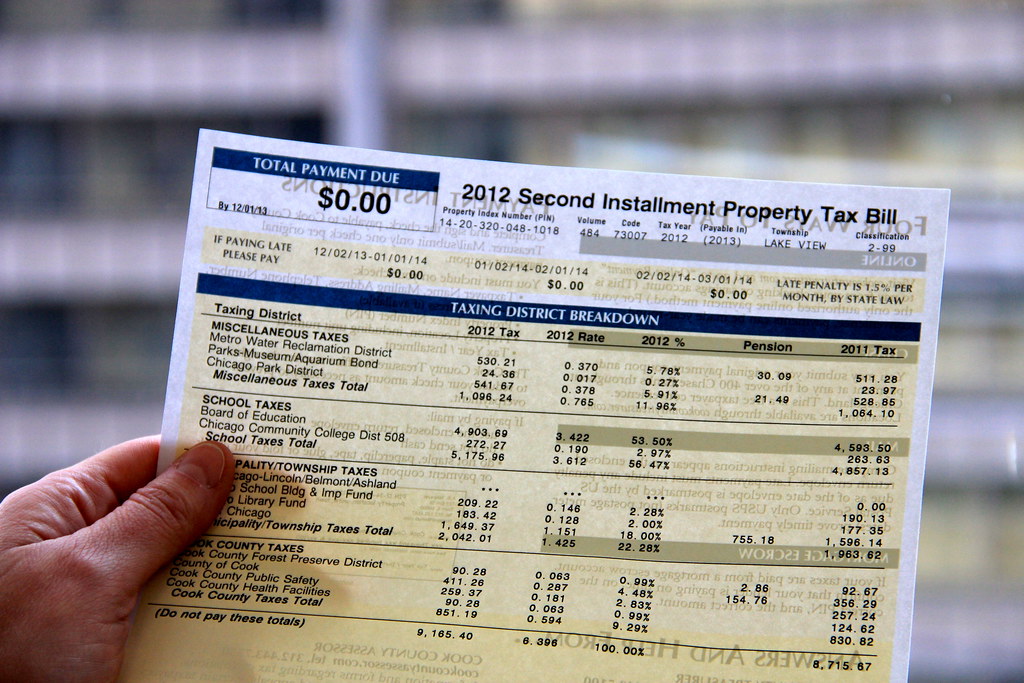 Photo: danxoneil / flickr (CC BY)
Local property taxes are not collected as a single annual charge for all properties; billing timelines depend on the property classification. For residential properties, the annual liability is split evenly across two installments: the first from July 16 to July 31, and the second from September 16 to September 30. In contrast, land holdings are not split into installments; the entire annual tax on land is levied once in September. As a result, September notices reflect either the remaining 50% for homeowners, the full 100% for landholders, or both combined for those owning both real estate assets.
Commercial and industrial structures (non-residential buildings such as retail shops or factories) are taxed in full during July, meaning they do not appear on September notices. However, most households owning an apartment or single-family house must remember that a second payment occurs in September. Missing the payment deadline by even a single day immediately incurs a 3% late payment penalty surcharge. If September 30 coincides with a Sunday or public holiday, confirming whether the statutory deadline automatically rolls over to the following business day helps avoid unnecessary disputes.
A common misconception often arises in this billing structure: assuming that taxes for the entire year were settled after paying the July bill. For single-home owners, it is easy to overlook that the July statement covered only half of their annual residential liability. Relying solely on July payment receipts while neglecting the September statement frequently results in delinquent penalty surcharges. Conversely, landowners who do not own residential dwellings typically receive no billing statement at all in July, meaning a sizable notice arriving for the first time in September is entirely standard. Preparing appropriately requires recognizing whether one holds housing, land, or both.
Estimating Your Property Tax: Understanding the Calculation Structure
 Photo: jurvetson / flickr (CC BY)
Property tax starts by calculating the taxable base: officially announced standard value multiplied by the fair market value ratio. For residential property, this fair market value ratio typically sits around 60%, with single-homeowner households often qualifying for reduced ratios and special tax bracket reductions depending on price thresholds. For instance, an apartment with an officially assessed standard price of 300 million KRW translates into a taxable assessment base of roughly 180 million KRW. Applying the progressive statutory tax brackets (ranging between 0.1% and 0.4%) alongside standard progressive deductions determines the base property tax figure. On top of this, local education taxes (equal to 20% of the property tax) and urban planning area taxes are generally added, explaining why the final bill appears larger than a direct rate multiplication.
Half of the resulting annual tax is billed in July, and the remaining half in September. For land holdings, statutory rate brackets and taxable assessment tiers vary according to usage classification (such as undeveloped commercial land, agricultural parcels, or forestland). For precise estimations, utilizing the "Local Tax Estimation Tool" provided on Wetax is recommended. Entering the published standard valuation and ownership status generates a dependable projection, allowing property holders to budget liquidity before large debits clear.
Understanding who benefits most under this calculation structure is essential. The fair market value ratio reductions and special concessionary rates are tailored primarily for single-homeowner households, particularly those holding modestly valued homes. Multiple-property owners facing identical property values are excluded from special concessionary rates, resulting in noticeably higher effective tax rates than single homeowners. On the other hand, single homeowners in regions where published values jump to reflect market spikes may see tax assessment bases surge even if rate brackets remain unchanged. Because the system utilizes progressive brackets, crossing price tier boundaries can create stepped jumps in tax obligations, making prior verification of bracket limits practical.
How to Pay via Wetax and Avoid Late Penalties
 Photo: Unknown / rawpixel (CC0)
Settling property taxes can be handled through three primary channels. First, online payment via the official Wetax website or mobile application enables taxpayers to log in with joint certificates or simplified digital credentials, inspect billed assessments, and pay directly via credit card or bank transfer. Second, taxpayers can wire funds directly to the virtual local tax treasury account printed on the billing invoice. Third, transactions can be completed at commercial bank teller counters or automated CD/ATM terminals using the local tax menu. Those prone to forgetting yearly deadlines can register for automatic debits via Wetax in advance to eliminate late-filing risks.
The critical factor remains the late payment surcharge. Missing the September 30 deadline triggers an immediate 3% surcharge the following day, followed by an additional monthly delinquency charge of 0.66% for ongoing nonpayment, steadily compounding the burden over time. If relocations or travel create risks of missed paper notices, creating a Wetax account and subscribing to electronic alerts via SMS or KakaoTalk notifications serves as a reliable hedge. Reviewing account balances and automated deduction settings before notices flood in during mid-September ensures a stress-free tax season.
Following an orderly payment sequence avoids common pitfalls. Begin by accessing Wetax to confirm that properties listed on the September statement match your actual ownership records. Next, ensure credit card limits or bank balances are sufficient depending on the payment vehicle chosen. Finally, if you enrolled in automatic direct debits, verify on the Wetax dashboard that the enrollment status is fully active. Assuming direct debit is functional without verifying account balances can lead to transfer failures on debit day, resulting in unintended penalties. Because compounding late charges accrue monthly, clearing payments promptly within the statutory window prevents accumulating excess costs.
Overall Assessment
The strongest aspect of this guide is its clear demarcation between residential and land billing calendars. Under the Local Tax Act, billing cycles are engineered specifically by asset classification, yet taxpayers unfamiliar with this distinction regularly experience surprise when receiving September notices. Recognizing the timetable and taxable categories beforehand provides tangible benefits by smoothing liquidity demands and eliminating unexpected financial shocks. Encouraging the use of Wetax automatic debits and digital notifications represents a practical solution.
One limitation worth noting lies in the valuation discussion. While explanations cover fair market value ratios and progressive brackets, they do not address the gap between officially announced standard values and real market conditions. Published values often diverge substantially from transaction prices, with disparity rates fluctuating across regions and timeframes. Because Wetax calculation tools rely on published standard assessments as inputs, discrepancies between projected tax burdens and lived financial strain will persist in areas where assessments lag actual markets. Ultimately, exact obligations are finalized only once the official billing invoice is issued.
3 Immediate Action Items for Today
- Log into Wetax and verify that properties listed on your September billing match actual holdings.
- Distinguish between residential and land components and mark the September 30 deadline on your calendar.
- Inspect payment balances and confirm the active registration of Wetax direct debits.
Property taxes recur annually, yet understanding payment calendars and assessment structures prevents them from turning into sudden financial surprises. Confirming billing records and reviewing debit arrangements between September 16 and September 30 ensures a smooth tax period free from unnecessary late surcharges.