Understanding Auto Insurance in Korea: Accident Response, Repairs, and Claims
Auto insurance policy terms govern emergency response sequences, premium determination factors, grade-based bumper repair rules, property damage limits, diminution of value eligibility, and policy exclusions. Using the Samsung Fire Anycar policy as an example, this guide outlines the core mechanics.
Table of Contents
When auto insurance renewal notices arrive, most drivers check only the final premium figure and move on. Few open the policy handbook to see how that number was calculated or what scope of compensation applies when an accident occurs. Yet insurance policies clearly define specific thresholds for premium discounts and loss compensation standards. This guide details what actions to take immediately following an accident, the primary drivers of insurance premiums, and the boundaries of recognized repairs and financial recoveries.
First Steps at the Scene and the Two Pillars of Premium Pricing
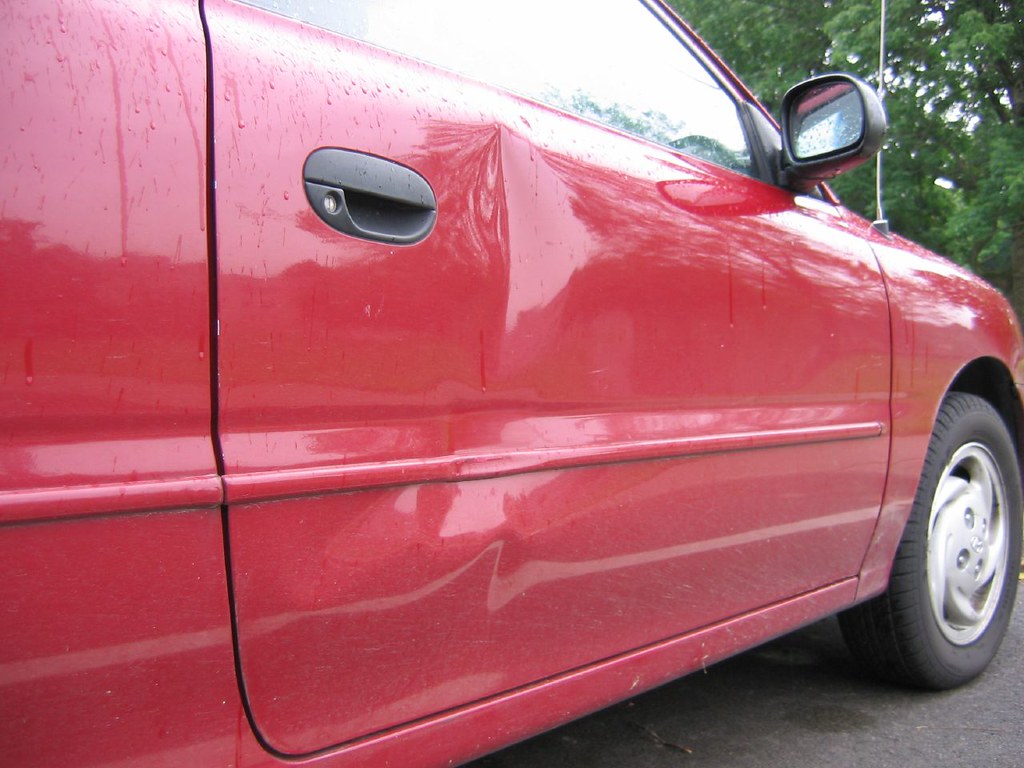 Photo: shrff14 / flickr (CC BY)
When an accident happens, the very first step is to bring the vehicle to an immediate stop and assess the surroundings. In a 25-minute conversational video titled "Secrets of Auto Insurance Policies That Save You Money Once You Know Them! From Enrollment to Accident Processing!" (https://www.youtube.com/watch?v=-95AQjcAAu4), YouTube channel Baro Rent-a-Car breaks down accident response protocols, premium structures, and coverage limits based on the Samsung Fire Anycar Personal Auto Insurance policy (specifically the January 2021 revision). The video outlines a five-step emergency protocol: stop immediately, administer emergency aid to any injured parties, secure situational evidence, move vehicles to a safe location, and contact your insurance carrier. When preserving evidence, drivers are advised to capture multiple angles showing vehicular heading, traffic signal states, and road surface tire marks rather than photographing damaged panels alone, using marking spray where feasible. If only property damage occurred and roadway hazard prevention is complete, police reporting is not legally mandated, though contacting authorities becomes essential if liability is contested or injuries are present.
Premiums are governed by two distinct pillars: driver-related attributes and vehicle-related attributes. Driver variables include age, gender, driving history, traffic violation records, and claim history over the preceding three years. Vehicle variables encompass vehicle type, model, trim grade, insured vehicle valuation, and designated usage (commuting versus commercial operation). Viewing premiums through these two distinct lenses clarifies why annual pricing fluctuates. Driving habits and claims history represent areas that evolve and can be controlled over time, whereas vehicle characteristics are fixed parameters determined at policy inception.
Bumper Scratches: Repair Methods Vary by Damage Severity
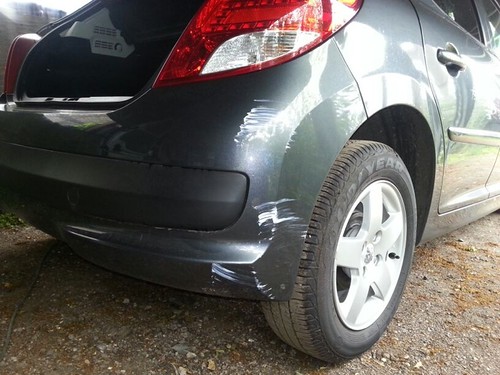 Photo: Jonathan Rolande / flickr (CC BY)
A scratched bumper does not automatically warrant a brand-new replacement assembly. According to the video, minor surface damage to exterior components is subject to Korea Insurance Development Institute standards, which mandate restorative repair over parts replacement. Typical plastic bumper damage falls into three categories: Type 1 involves scratches limited to the clear coat layer, restored through polishing and buffing; Type 2 reaches the colored paint layer, resolved via partial repainting; Type 3 involves gouging or tearing of the plastic substrate itself, requiring putty filler or plastic welding before painting. Similar restoration standards apply to other exterior body panels like hoods, fenders, and doors.
This framework is rational because it acts as a safeguard against excessive repair claims. Replacing an entire bumper assembly for minor cosmetic blemishes inflates repair costs, which ultimately feeds back into industry-wide premium hikes. Categorizing restoration techniques by physical depth upholds the principle of restoring only what is necessary. Explicit exceptions exist: if restorative repair costs exceed the cost of replacement parts, or if functional integrity cannot be guaranteed, full replacement is approved. The policy does not enforce cheap alternatives arbitrarily, but prioritizes reasonable restoration to pre-accident condition.
Blind Spot: The Danger of Treating a Single Insurer's Policy as an Industry Standard
 Photo: Châu Thông Phan / stocksnap (CC0)
The most significant caveat in the video is that all figures are explained using a single reference point: Samsung Fire's Anycar Personal Auto Insurance policy as revised in January 2021. Contractual clauses, limits, and definitions vary across carriers, and terms shift whenever policies are updated. Toward the very end of the video, the presenters note that policy terms undergo continuous revisions and urge viewers to consult up-to-date documentation. However, because this disclaimer appears only briefly at the conclusion, viewers may mistakenly assume that specific figures—such as the 120% repair cost ceiling or rental car allowance limits—apply universally across all carriers. Policyholders insured with other companies must avoid accepting these numbers as absolute without verifying their own policy terms.
Furthermore, the explanatory depth across coverage types is uneven. When discussing lost future earnings under bodily injury liability, the video mentions subtracting basic living expenses from average monthly income and applying the Leibniz coefficient, yet fails to specify the exact percentage deducted for living expenses. In contrast, other provisions like consolation money, injury grade classifications, and diminution of value percentages are presented in granular detail. This contrast leaves certain provisions well-documented while others remain conceptual.
Repair Cost Ceilings, Rental Cars, and Diminution of Value
 Photo: Ryan McGuire / stocksnap (CC0)
Repair compensation is subject to clear upper boundaries. Under property damage liability, allowable repair costs are capped at 120% of the vehicle value immediately prior to the accident, extending to 130% only under exceptional circumstances such as aged classic vehicles or customized utility builds. If repairs exceed this threshold or the vehicle is deemed a total loss, the insurer pays the pre-accident market replacement value. When a vehicle is rendered unusable during repair, rental vehicle reimbursement covers the lowest rental rate among comparable vehicle classes: up to 25 days for standard repairs, up to 30 days if maintenance requires over 160 labor hours, and 10 days in total loss scenarios. If a claimant opts not to rent a vehicle, they can receive a transportation allowance typically equal to 35% of standard rental rates.
For vehicles under five years old, diminution of value claims (loss of resale value) should be examined. According to the video, additional compensation becomes available when repair costs exceed 20% of the pre-accident vehicle valuation, with payout percentages scaling by vehicle age: 20% of repair costs for vehicles aged one year or less, 15% for vehicles between one and two years, and 10% for vehicles between two and five years. Remembering the dual requirement is essential. The vehicle must be under five years old, and repair expenses must exceed 20% of its valuation. Meeting only one condition disqualifies the claim.
Overall Assessment: Agree with Diagnosis, Conditionally Agree with Prescription
Holding insurance does not mean every loss is indemnified. Standard policy exclusions cited in the video include intentional acts, driving under the influence (BAC 0.03% or higher), narcotics or drug impairment, unlicensed driving, and hit-and-run departures. Beyond conduct, catastrophic events like armed conflict, insurrection, riots, natural disasters (earthquakes, volcanic eruptions), and nuclear contamination are excluded. Solitary tire punctures resulting from roadway potholes are excluded by default, whereas tire damage sustained concurrently during a vehicular collision qualifies for coverage.
Even when coverage applies, settlements are adjusted for comparative negligence. If the claimant shares fault, payout totals are reduced proportionately; on a 1 million KRW loss where the claimant bears 20% fault, only 800,000 KRW is disbursed. Passengers are not exempt from scrutiny: knowingly riding with an intoxicated driver can trigger up to a 40% reduction in settlement, while seatbelt non-compliance and unauthorized boarding also reduce payouts. Understanding these settlement adjustments highlights standard discount opportunities: named-driver limitations (sole driver, couple, or family), age restriction endorsements (such as age 26 or 30), mileage-based discounts, black box recorder discounts, child discounts (for children under 5 or during pregnancy), and low-income driver discounts. Roadside emergency service endorsements (jump-starts, tire changes, lockouts, emergency fuel, emergency towing) and legal expense riders (criminal defense, fines, settlement assistance) are equally worth reviewing.
The accident response sequence and bumper repair hierarchy outlined in the video are sound. The five-step checklist—from stopping to notifying the carrier—is actionable, and preserving broad angles of traffic lights and roadway markings provides real utility during negligence disputes. Similarly, grading bumper damage across polishing, repainting, and structural repair prevents unnecessary part replacements. Restoring components based strictly on damage severity serves as a rational safeguard against soaring insurance premiums.
The reservation lies on the prescriptive side—specifically, the source of these figures. The 120% repair ceiling, 25-day rental window, and 35% transportation allowance are drawn exclusively from Samsung Fire's January 2021 personal policy. Because policy clauses and coverage caps differ across insurers and evolve across revisions, these numbers should never be accepted as industry-wide standards without cross-referencing your own policy. While the video includes a brief disclaimer, placing it at the very end risks creating misconceptions for policyholders of other carriers.
3 Immediate Action Items for Today
- Review your auto insurance policy certificate to verify enrolled riders and coverage terms.
- Save the 5-step accident response sequence (stop, aid, document, relocate, notify insurer) to your phone notes.
- Check your policy's exclusion rules and comparative negligence terms to ensure no eligible discounts were missed.
Both premium costs and accident payouts depend on the language in your policy. Rather than memorizing figures like 120%, 25 days, or 35% from a single company, comparing your current insurance certificate against these categories is the most reliable way to achieve lasting savings. Accidents happen without warning, but policy terms can always be reviewed in advance.